SN 5 EP 3: Protecting Aging Parents from Scams (Part I)

In this episode of the Black Parents Aging Podcast, Olivia Smith and Nicola Robinson dive into a growing issue impacting families across the country—elder fraud and scams. With billions of dollars lost each year, scammers are increasingly targeting older adults through sophisticated tactics that can be difficult to recognize.


Olivia and Nicola break down some of the most common scams affecting seniors, including government impersonation scams involving Social Security and Medicare, IRS threats, tech support fraud, and devastating online romance scamsthat prey on loneliness and trust. They also discuss why many seniors hesitate to report scams and how embarrassment, fear, and concerns about losing independence can keep families in the dark.


Throughout the conversation, they share real-life examples, warning signs, and practical tips to help families recognize red flags and protect their loved ones. This episode is a must-listen for anyone with aging parents or grandparents who want to stay informed and proactive about preventing fraud.


Key Takeaways

• Fraud targeting seniors is rising rapidly, with reported losses increasing from $600 million in 2020 to $2.4 billion in 2024.
• Many scams go unreported because victims feel embarrassed or ashamed, meaning the real financial impact is likely much higher.
• Government impersonation scams involving Social Security, Medicare, and the IRS are among the most common ways scammers target older adults.
• Legitimate government agencies will never call unexpectedly to request personal information or payment over the phone.
• Scammers often create a sense of urgency, pressuring victims to act quickly before they have time to verify the request.
• Romance scams are one of the most emotionally and financially devastating, often targeting widowed or lonely seniors through online relationships.
• Fraudsters frequently invent emergencies or sudden financial problems to convince victims to send money repeatedly.
• Tech support scams exploit seniors who may be less familiar with computers, tricking them into granting remote access to their devices.


March 18, 2026
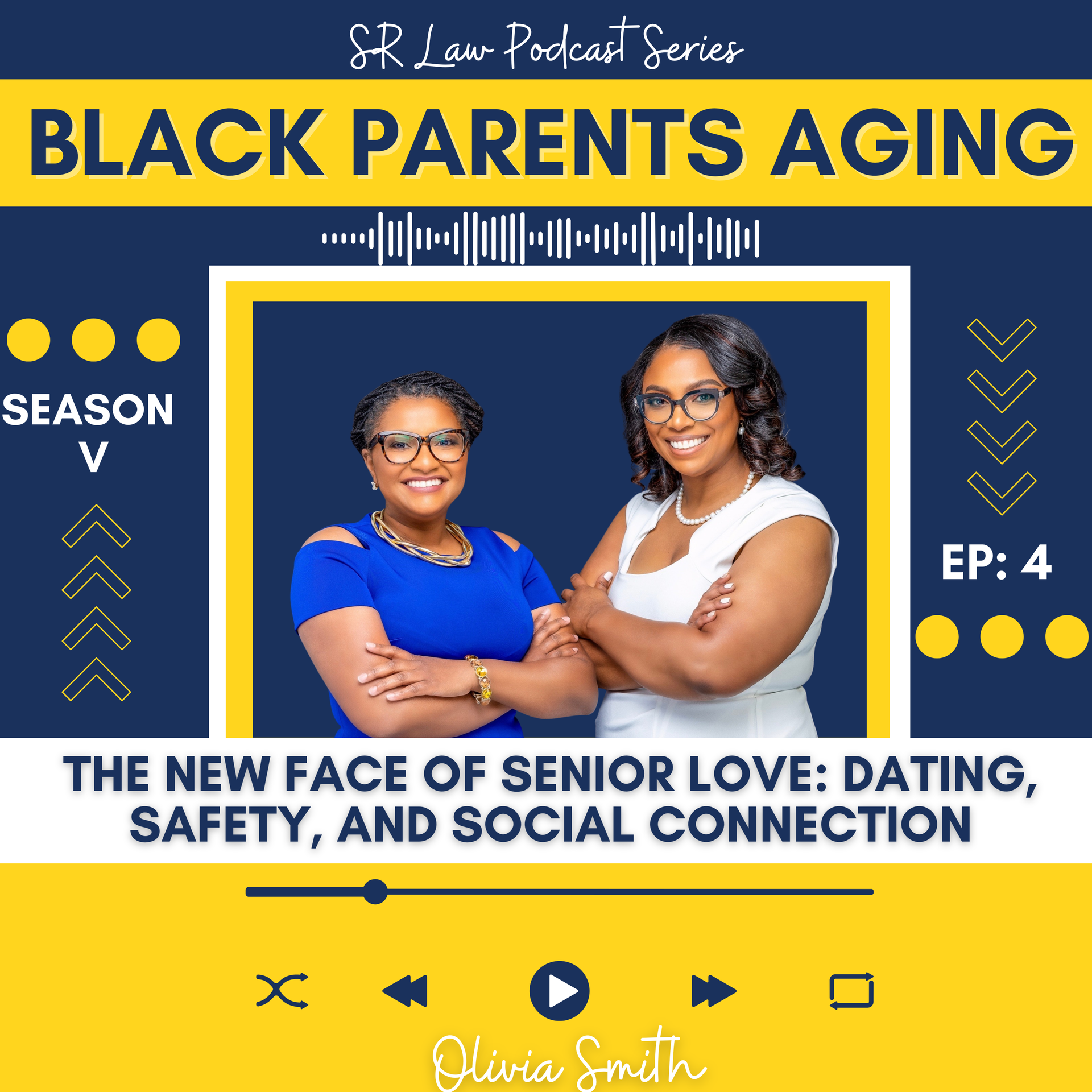
In this episode of Black Parents Aging, Olivia Smith explores the importance of love, companionship, and meaningful connection for seniors over 70. Drawing from real conversations with clients and current research on aging, she discusses how social isolation can impact emotional well-being, cognitive health, and overall quality of life. Olivia examines what modern romance looks like later in life, including the growing use of dating apps among older adults and the unique emotional and cultural dynamics many Black seniors face when pursuing companionship. She also provides practical guidance for families on how to support aging parents who are dating, while balancing concerns about safety and vulnerability. The episode highlights the real risks of romance scams targeting older adults and offers important tips to help seniors and their loved ones recognize warning signs and protect themselves. Ultimately, the conversation encourages listeners to approach aging with empathy and intention — recognizing that the desire for connection, love, and joy does not disappear with age. Listeners are invited to reflect on how families can create space for aging loved ones to live fully, pursue meaningful relationships, and maintain both independence and dignity. Key Topics: The health benefits of companionship for seniors Popular dating apps for seniors and how they work Safety tips to avoid romance scams Family dynamics and supporting aging parents in dating The emotional and social importance of love after 70 
March 17, 2026
The Reality of Long-Term Care in Georgia Caring for aging parents is expensive—often far more than families realize until they are in the thick of a healthcare crisis. In Georgia, the average daily cost of a private room in a nursing home is approximately $223. When you do the math, that exceeds $81,000 per year . Providing that same level of care at home or in an assisted living facility can be even more taxing on a family’s finances. At SR Law Group , we believe that every senior deserves quality care without the fear of bankruptcy. Located in Douglasville, Georgia, our boutique firm focuses on the needs of older individuals, and their families. We empower families to safeguard generations, transfer wealth, and reduce conflict through proper planning. One of the most common questions we hear is: "How hard is it to get on Medicaid in Georgia?" The honest answer is that while the program is a lifesaver for many, the rules are complicated, ever-changing, and the application process can be incredibly daunting. However, with the right guidance, it is a hurdle you can clear. Why Is the Medicaid Application Process So Difficult? Medicaid is a "need-based" program, meaning it is designed for those with limited income and assets. Because it is a joint federal and state program, Georgia has its own specific set of stringent requirements. The difficulty often lies in the "Three-Headed Monster" of Medicaid eligibility: 1. The Strict Income and Asset Limits To qualify for nursing home Medicaid in Georgia, an applicant must meet very specific financial thresholds. As of 2024, an individual generally cannot have more than $2,000 in countable assets . For a couple that has spent a lifetime working and saving, seeing that number can be terrifying. Families often worry that they will have to sell their homes or leave a healthy spouse destitute just to get the care they need. 2. The Infamous "Five-Year Look-Back" Period Many people think they can simply give their assets to their children right before applying for Medicaid. This is a dangerous misconception. Georgia implements a 60-month (five-year) look-back period . The state will scrutinize every financial transaction you have made in the five years prior to your application. If you transferred property or gave away money for less than fair market value, you may be hit with a "transfer penalty," leaving you ineligible for benefits for months or even years. 3. The Functional Medical Necessity Beyond the finances, you must prove that the care is medically necessary. This requires specific documentation from healthcare providers stating that the applicant requires a "nursing home level of care." Navigating the paperwork between doctors, hospitals, and the Department of Community Health (DCH) is often where many families get stuck. Common Roadblocks to Eligibility Even if you believe you meet the requirements, certain factors can make the process significantly harder: Excess Income: If your monthly income is higher than the state’s limit, you aren't automatically disqualified, but you must set up a Qualified Income Trust (often called a Miller Trust) . Without this specific legal document, your application will likely be denied. Life Insurance and Burial Plots: Some life insurance policies count as assets, while others do not. Miscalculating these can push you over the $2,000 limit. The "Snapshot" Date: For married couples, the state takes a "snapshot" of your combined assets the day the spouse enters the hospital or nursing home. This determines how much the healthy spouse (the Community Spouse) is allowed to keep. How SR Law Group Makes the Hard Process Easier At SR Law Group, we don’t just sell documents; we follow an educational approach . We believe in empowering you to make decisions that make sense for your specific circumstances. Our process is designed to take the weight off your shoulders. Long-Term Care and Medicaid Planning We work with clients in two main stages: Advance Planning: For those currently in good health or recently diagnosed with an illness, we create a roadmap to protect assets well before the five-year look-back period becomes an issue. Crisis Planning: For families whose loved one is already hospitalized or in a nursing home, we use legal strategies to protect as much of the estate as possible while expediting the Medicaid application. Guidance and Recommendations Our team, including attorneys like Olivia Smith, provides a hands-on approach. We help you understand why each document—from a Power of Attorney to a Healthcare Directive—is a vital piece of the Medicaid puzzle. We use flat fees so there is no "nickel and diming," ensuring you can focus on your family, not the clock. The Benefits of Proper Planning: Protecting Your Legacy The ultimate goal of Medicaid planning is to ensure that a lifetime of hard work isn't wiped out in a few months by nursing home bills. Protecting the Healthy Spouse One of our primary goals at SR Law Group is ensuring the "Community Spouse" can maintain their standard of living. Through proper legal planning, we can often protect a significant portion of assets for the spouse staying at home, preventing them from falling into poverty. Preserving Inheritance By navigating the Medicaid rules correctly, families can often preserve an inheritance for their children and grandchildren. This is about more than just money; it's about transferring wealth and maintaining the sanity of the family during a stressful time. You Don't Have to Navigate This Alone Is it hard to get on Medicaid in Georgia? Yes, if you do it alone. The application is a legal minefield where one small mistake can lead to a denial and thousands of dollars in out-of-pocket costs. However, with SR Law Group, the process becomes manageable. Our dedicated team listens and helps you accomplish YOUR goals. We provide consistent communication and easy-to-understand guidance. We are Georgia's premier Black-owned boutique law firm, and we are here to ensure that your future is secure and your legacy is protected. Don't wait until a health crisis forces your hand. Secure your future and protect those you love by starting your plan today.
March 10, 2026
In this episode of Black Parents Aging , Olivia Smith and Nicola Robinson continue their conversation on elder fraud by focusing on investment scams, cryptocurrency fraud, and sweepstakes scams that disproportionately target older adults. They discuss how scammers pose as investment professionals promising to double or triple retirement savings, why cryptocurrency scams are especially dangerous because the money is nearly impossible to recover, and how classic sweepstakes scams still trap many seniors today. The conversation also shifts to practical steps families can take to protect aging parents and grandparents , including having open conversations about scams, freezing credit, blocking suspicious calls, monitoring financial accounts, and using tools like powers of attorney to help oversee finances. The episode closes with warning signs families should look for and resources available to report elder fraud and scams. Key Takeaways Cryptocurrency and investment scams caused over $1.6 billion in losses for victims over 60 in 2024 . Any investment promising to double or triple your money quickly is likely a scam . Cryptocurrency scams are especially dangerous because once the money is sent, it is extremely difficult to recover . Sweepstakes scams often ask victims to pay a fee or taxes upfront to claim a fake prize . Simply talking with aging parents or grandparents about scams can significantly reduce their risk of falling victim . Tools like the Do Not Call Registry, call blocking, and credit freezes can help protect against fraud. Services such as EverSafe or Carefull can monitor accounts for unusual transactions or hidden subscription charges. A Power of Attorney can allow trusted family members to monitor financial accounts and protect loved ones. Sudden financial trouble, excessive packages, or unusual spending may be red flags of a scam .  Elder fraud can be reported to the FBI’s Internet Crime Complaint Center (IC3) or the National Elder Fraud Hotline .
February 27, 2026
In honor of Black History Month, Attorney Olivia Smith, co-owner of SR Law Group, hosted a vital conversation on a topic often overlooked in community discussions: The Legal Protection of Legacy. Statistics show that roughly 67% of Black Americans do not have a will, leading to a massive loss of "Black Wealth" in the probate system. This webinar was designed to bridge that gap, providing families with the tools to transition from "thinking about a plan" to "securing a legacy." Understanding the Framework: Estate Planning vs. Elder Law One of the most important takeaways from the session is the distinction between planning for what happens after we pass and planning for the years in between. 1. The Estate Planning Foundation Estate planning is the roadmap for your assets. Attorney Smith identifies five essential "Life Documents" that every individual should have to avoid state interference: Last Will and Testament: Your voice in court to decide who receives your assets and who cares for minor children. The Living Trust: A tool for privacy and speed that allows assets to bypass the public (and often expensive) probate process. Durable Power of Attorney & Healthcare Directive: Documents that empower a trusted person to make financial and medical decisions if you become incapacitated. 2. The Elder Law "Plus" Elder law focuses on long-term care. With nursing home costs in Georgia and across the U.S. often exceeding $10,000 per month, a crisis can quickly deplete a lifetime of savings. Medicaid Asset Protection: Understanding the "5-Year Look-Back Rule" is critical. By planning early, families can protect the family home from being seized to pay for care. The Caregiver Child Exception: Legal avenues that allow adult children who have lived with and cared for a parent to keep the family home. The Cautionary Tale: The Risk of "DIY" Legal Help Attorney Smith shared the moving story of the Morehead Family . Despite a lifetime of hard work and acquiring eight properties, a "DIY" will drafted by a family member led to a two-year legal battle against a professional real estate development company. The lesson is clear: A Will is a ticket to Probate Court. If it isn’t drafted and executed with precision by an experienced attorney, the "savings" of a DIY kit can cost a family their entire inheritance in legal fees and lost property. Breaking the Cycle of "Heirs Property" The webinar addressed the "Probate Hell" often found in our communities, where property stays in a deceased grandparent's name for decades. This creates Heirs Property, where dozens of relatives may have a claim, making the home impossible to sell or insure. Olivia Smith emphasizes that probate is not an honor; it is work, and addressing these issues now is the only way to ensure the next generation starts with a "full hand." Take the Next Step Legacy is not just what you leave behind; it is what you protect today. SR Law Group is dedicated to helping families in Georgia and the Virgin Islands navigate these complex waters with empathy and expertise. Watch the full webinar replay above and subscribe to our podcast, Black Parents Aging, for weekly tips on navigating the journey of caregiving and legal protection.
February 25, 2026
In this episode of Black Parents Aging, Olivia Smith interviews financial planner Jeff Morris, who specializes in long-term care insurance. They discuss the importance of planning for long-term care, the misconceptions surrounding it, and the different types of policies available. Jeff shares insights on when to start considering long-term care insurance, the costs involved, and the health assessments required for eligibility. The conversation emphasizes the need for proactive planning, especially for aging parents, and highlights the benefits of hybrid policies that combine life insurance with long-term care coverage. Takeaways Long-term care insurance covers activities of daily living. Many people confuse long-term care with Medicare. Planning for long-term care should start in your 50s. Costs for long-term care can be significant, averaging $65,000 to $112,000 annually. Hybrid policies offer a death benefit if not used for care. Health assessments are crucial for obtaining long-term care insurance. Many believe their children will care for them, which is a misconception. The government does not cover long-term care costs adequately. Choosing a reputable insurance company is essential. Proactive planning can prevent financial strain later in life. 
February 19, 2026
In this episode, Olivia Smith discusses the often-overlooked issue of aging behind bars, highlighting the significant increase in older inmates and the unique challenges they face. She shares personal experiences related to her uncle's incarceration and compassionate release, emphasizing the emotional and health-related struggles both inmates and their families endure. The conversation also touches on the need for systemic changes in how the justice system handles aging individuals and offers practical advice for families navigating these difficult circumstances.  Takeaways Growing old behind bars is an increasing reality in America. The number of inmates over 50 has significantly increased. Incarceration accelerates the aging process for inmates. Health care for aging inmates is often inadequate. Families of aging inmates face emotional and financial burdens. Compassionate release is a complex and difficult process. Support networks are crucial for families of incarcerated individuals. Legal assistance can improve chances of compassionate release. Self-care is essential for families advocating for loved ones. The issue of aging in prison is a broader societal concern.
Show More